Will the VA Pay for My Stair Lift?
Posted on by Eric Rubel
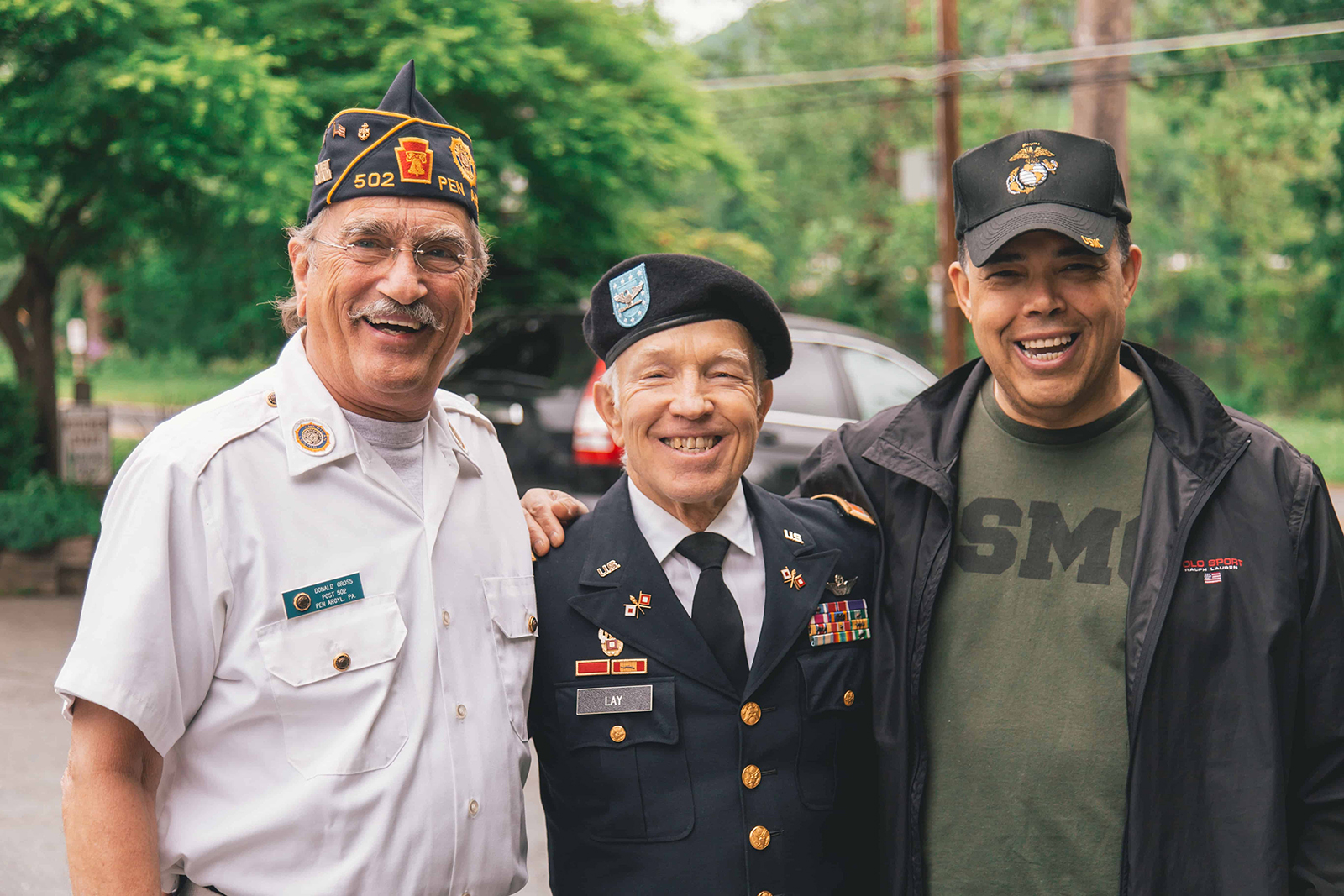
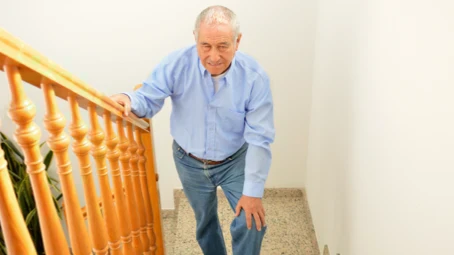
For many veterans, staying in the home they love as they age or manage a disability is a top priority. But mobility limitations can make daily living more challenging, and make stairs difficult or unsafe. One common question we hear is: Will the U.S. Department of Veterans Affairs (VA) pay for a stair lift?
The short answer is: it depends on your situation and which VA benefits you qualify for. In this blog post, we’ll explore several grant programs offered by the VA, and how qualifying veterans can get started.
Key Takeaways: What to Know About VA Assistance for Stair Lifts & Other Home Accessibility Solutions
The VA offers a variety of programs that help veterans modify their homes to improve accessibility and independence. These resources aren’t direct payment for equipment like stair lifts in every circumstance, but they can provide valuable financial support or funding for home modifications that include accessibility features when they are medically necessary or part of a broader adaptation plan.
- Service-connected disability status significantly affects eligibility and how much support you may receive.
- Some grants support major home adaptations while others focus on medically necessary improvements.
- Typically, the funds are paid to the contractor or provider doing the renovation rather than directly to you.
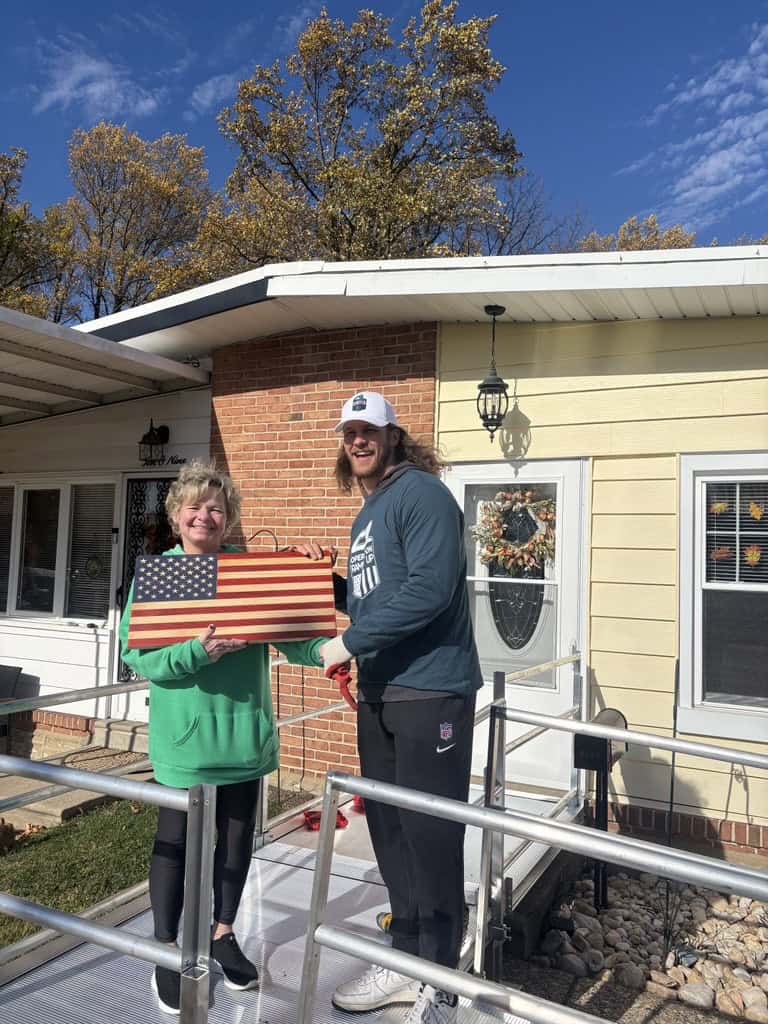
Featured Story: Team Effort to Install a Wheelchair Ramp for Veteran in Need
After sustaining a serious spinal injury, an army veteran needed a wheelchair ramp installed to allow him to return home from the hospital. Lifeway Mobility joined forces with nonprofit organization Operation Ramp It Up and the Philadelphia Eagles to get this project completed to improve safe home access for a local veteran.
Types of VA Grants & Programs That May Fund Accessibility Modifications
Here’s a breakdown of the VA’s programs for veterans interested in a stair lift or other solutions to improve home accessibility improvements:
Special Home Adaptation (SHA) Grant
The SHA grant is designed to help veterans with certain service-connected disabilities adapt or purchase a home that accommodates their disability.
- Who it’s for: Veterans who own (or will own) a home and have qualifying service-connected disabilities, such as certain severe burns, certain respiratory or breathing injuries, and the loss or loss of use of both hands.
- What it can cover: This grant may be used to adapt a home to improve accessibility, which can include modifications like widened doorways, wheelchair ramps, and potentially stair lifts. The exact scope depends on your documented needs and VA approval.
- Funding: For FY2026, eligible veterans can receive up to $25,350 over their lifetime. You can use the grant in multiple stages if needed.
Specially Adapted Housing (SAH) Grant
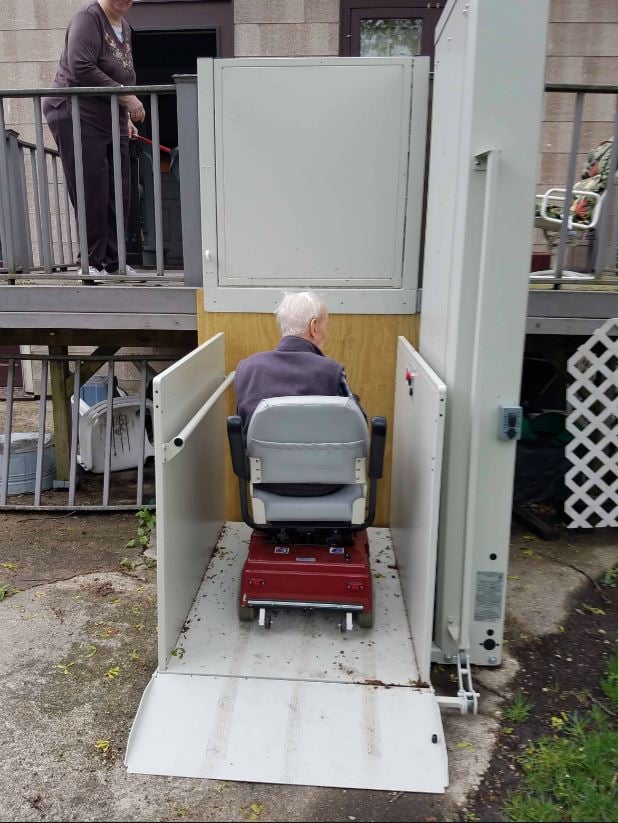
The SAH grant supports veterans with more severe service-connected disabilities who need extensive home modifications or even to build a specially adapted home.
- Who it’s for: Veterans who own (or will own) a home and have permanent service-connected disabilities that significantly limit mobility or daily functioning, such as blindness, certain severe burns, and the loss or loss of use of multiple limbs.
- What it can cover: SAH funds are used for large-scale adaptations, such as accessible bedrooms and bathrooms, modified entryways, ramps, and other solutions to manage stairs.
- Funding: For FY2026, the maximum SAH benefit is $126,526. Like the SHA grant, funds can be distributed across multiple projects over time.
Temporary Residence Adaptation (TRA) Grant
If you are temporarily living in a family member’s home that needs modifications to meet your needs, the TRA grant may help.
- Who it’s for: Veterans eligible for SHA or SAH who are residing in a relative’s home that needs changes.
- What it can cover: Adaptations to make the house more accessible during your stay, which could include wheelchair ramps or other accessibility features, such as a stair lift, to assist with steps.
- Funding: Amounts vary based on which primary grant you qualify for. For FY2026, the maximum is $9,100 for those eligible for SHA, or $50,961 for those eligible for SAH.
Veteran-Directed Care (VDC)
While not a traditional grant for home renovation, Veteran-Directed Care helps veterans manage care at home by offering a flexible budget for services and supports tailored to their needs.
- Who it’s for: Veterans enrolled in VA health care who need personal care services, are at risk of nursing facility placement, or have caregiver needs.
- What it can cover: This program gives veterans more control over services and goods, including some items and support that help with daily living or independent life at home. Depending on local availability and how your plan is structured, this might include stair lifts and other accessibility solutions.
- How it works: Veterans work with a care coordinator and manage a budget that helps them stay at home safely, with flexibility over the types of supports used.
“Not only did he do a fantastic job, he was very informative and patient with us.”
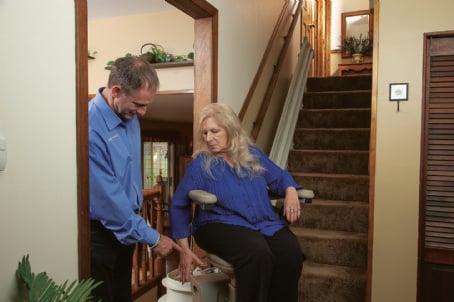
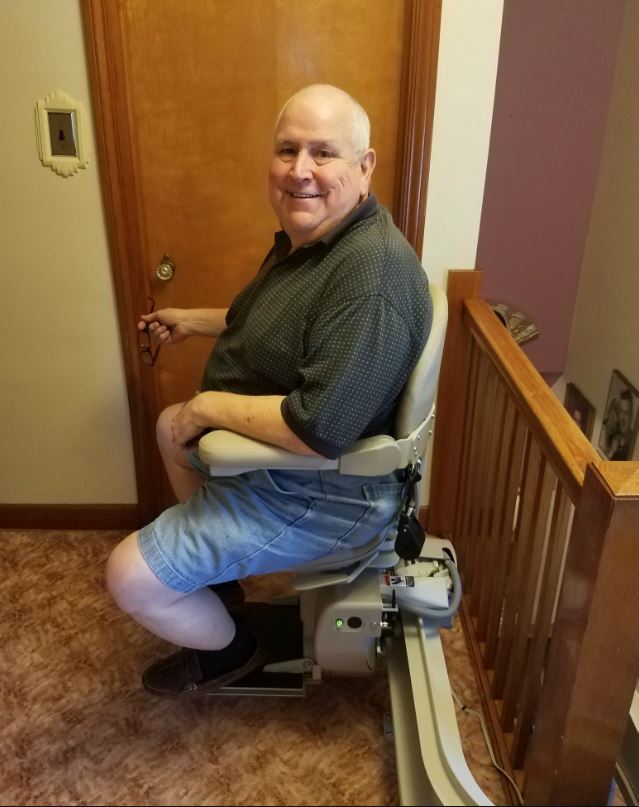
- Mary K., on a stair lift installed by Lifeway Mobility for her husband, a veteran
How to Apply for VA Home Modification Assistance
Here’s a step-by-step guide to get started:
- Visit Your VA Doctor. They will provide a script recommending mobility equipment, such as a stair lift (or wheelchair ramp, lift, etc.)
- Check Your VA Disability Status and Documentation. Gather your VA disability rating letter and medical records showing the mobility issues that create the need for home modifications, and script recommendation from your doctor.
- Identify Which Program Fits Your Situation. Choose the grant or service program (SHA, SAH, TRA, or VDC) that matches your needs. You can work with a Veterans Service Officer (VSO) for help.
- Complete the Appropriate VA Forms. For housing grants like SHA/SAH/TRA, this typically involves VA Form 26-4555 (Application in Acquiring Specially Adapted Housing or Special Home Adaptation Grant). You can submit online through eBenefits, by mail, or in person at a VA Regional Office.
- Work With the VA During Review. After submitting, a VA agent will contact you, verify eligibility, and may inspect your home or request additional documentation.
- Get Your Project Approved and Scheduled. Once approved, funds are typically released to the contractor or provider doing the work, not directly to you.
Final Thoughts
There is a path for many veterans to get help paying for stair lifts and other accessibility improvements through VA home adaptation programs. The specifics depend on your disability status, housing situation, and which grant or service program best fits your needs.
Thank you for your service!. Now let the VA (& Lifeway Mobility) support you in staying safe and independent at home.
“The lift has really been a life saver. I now have a safe and easy way to get in and out of my home and get where I want to go. The lift is perfect and has a really smooth ride.”
- Don C., a veteran
Frequently Asked Questions
Does the VA directly pay for a stair lift?
The VA does not have a universal program that automatically pays for stair lifts. However, stair lifts may be covered when they are part of an approved home adaptation plan funded through VA grants such as Specially Adapted Housing (SAH) or Special Home Adaptation (SHA).
How can I find out which programs I may be eligible for?
A Veterans Service Officer (VSO) or your local VA regional office can guide you through the process and help you get the benefits you’ve earned.
What factors affect whether a stair lift is covered through a VA program?
Approval depends on medical necessity, disability status, and how the stair lift fits into an overall accessibility solution.
If I did not serve during a war-time conflict, am I still eligible for a VA grant?
Yes, the grant programs apply to any veteran with an honorable discharge that served in any of the military branches.
If I have never been to the VA before, can I still receive funding assistance?
There still may be an opportunity to qualify. Call your local VA hospital to schedule an appointment and learn more.
How long does the VA approval process usually take?
Timelines vary depending on the program, documentation, and complexity of the requested modifications. In general, the process can take several weeks to a few months from application to approval. Working with a Veterans Service Officer (VSO) and submitting complete documentation can help prevent delays.
Can I choose my own stair lift or accessibility provider?
In many cases, yes, as long as the provider and the project meet VA requirements and are approved as part of your adaptation plan.