Alzheimer’s and Dementia Home Safety Tips
Posted on by Eric Rubel

When a loved one is diagnosed with dementia or Alzheimer’s disease, one of the first questions families ask is: “Are they still safe at home?” As memory, balance, judgment, and perception change, everyday tasks can become dangerous without the right support in place.
Creating a safer home environment is one of the most effective ways to support independence, reduce caregiver stress, and improve quality of life. With the right home safety modifications, families can help loved ones remain comfortable and secure for as long as possible.
This post covers practical dementia safety home tips, accessibility modifications, and home safety recommendations for people living with Alzheimer’s disease and other forms of dementia.
June is Alzheimer’s & Brain Awareness Month, hosted by the Alzheimer’s Association. See the bottom of this post for a link to the recorded Dementia Safety Webinar from Lifeway Mobility with the Alzheimer’s Association.
How Dementia and Alzheimer’s Disease Impact the Brain & Body
Before we get started, it helps to understand how dementia affects the brain. Different parts of the brain control different functions:
- The frontal lobe controls executive function, decision-making, and speech
- The parietal lobe controls reading, writing, calculations, and learned skills
- The occipital lobe controls vision
- The temporal lobe plays a major role in memory
Alzheimer’s disease often begins in the temporal lobe before progressing into other areas of the brain. As the disease advances, it can affect:
- Memory and judgment
- Balance and coordination
- Vision and depth perception
- Sensitivity to heat or cold
- Navigation and way-finding abilities
- Ability to safely use appliances
- Emotional regulation and behavior
A person living with dementia may become confused, fearful, suspicious, or disoriented—even in familiar surroundings. These changes significantly increase the risk of falls, wandering, burns, medication errors, and other household accidents. That’s why evaluating dementia safety at home early and often is so important.
How to Create a Dementia-Friendly Home Environment

For individuals with Alzheimer’s disease or dementia, familiar routines and predictable environments can provide comfort and reassurance. Simple modifications can help minimize hazards and make daily activities easier to manage.
The goal is to create a home that remains safe without feeling overly restrictive or institutional. A dementia-friendly home helps reduce confusion and supports independence while improving overall safety.
Essential Dementia Home Safety Tips
Consider implementing the following safety measures throughout the home:
 Store household cleaners, chemicals, and sharp objects in locked cabinets
- Use appliances with automatic shut-off features
- Install stove knob covers to prevent unsafe use
- Remove toxic plants or decorative items that could be mistaken for food
- Keep emergency phone numbers clearly visible
- Use medication organizers or locked medication storage
- Remove locks from interior doors to prevent accidental lock-ins
- Add extra lighting throughout the home
- Keep pathways clear of clutter, cords, and loose rugs
- Secure firearms and other weapons in locked storage or remove them entirely
Many caregivers also benefit from keeping a “File of Life” or emergency medical information packet in an accessible location for first responders.
Prevent Wandering and Disorientation
Wandering is one of the most serious safety concerns associated with dementia. According to the Alzheimer’s Association, approximately six out of 10 people living with dementia will wander at some point. To help reduce wandering risks, you can:
 Place latches or deadbolts above or below eye level
- Use door alarms or monitoring systems
- Keep an extra set of house keys nearby
- Maintain a structured daily routine
- Encourage regular physical activity and meaningful engagement
- Reduce evening overstimulation for individuals experiencing sundowning
Providing calming activities, exercise, and supervision can help reduce anxiety and restlessness that often contribute to wandering behavior.
Address Vision and Perception Changes
Changes in visual processing are common in Alzheimer’s disease and can increase fall risks dramatically. For example, reduced peripheral vision may make it difficult for someone to notice furniture, leading to trips and injuries. Busy patterns and low-contrast environments can also create confusion.
Depth perception changes can also make stairs appear dangerous or distorted. Dark-colored stairs, for instance, may appear like holes or uneven surfaces to someone with dementia.
These simple, inexpensive adjustments can improve your loved one’s comfort and safety:
- Removing low furniture or unnecessary obstacles
- Using contrasting colors between dishes, tables, and placemats
- Improving lighting in hallways and stairways
- Avoiding patterned rugs or flooring
- Adding reflective stair-edge strips
- Painting walls and trim in contrasting colors for better visibility
Modify the Home Early—and Then Gradually
An important dementia safety home tip is to introduce changes as early as possible, as people living with dementia often adapt better when modifications are made in the beginning stages of the disease. Solutions and home modifications should then evolve alongside the individual’s changing physical and cognitive abilities. For example:
- Early stages: Reminder notes or labels may help with daily tasks.
- Mid stages: Supervision or appliance restrictions may become necessary.
- Later stages: First-floor living arrangements or mobility equipment may be needed.
Whenever possible, make changes to the home gradually, as sudden or dramatic environmental changes can increase confusion and anxiety.
Key Areas for Dementia Home Safety Modifications
When evaluating dementia safety at home, there are three major areas to assess: entering and exiting the home, navigating throughout the home, and bathroom safety.
A professional home accessibility assessment can help identify specific risks and opportunities for improvement.
1. Entering and Exiting the Home Safely
Safe home entry is essential for individuals with mobility limitations, impaired balance, or visual challenges.
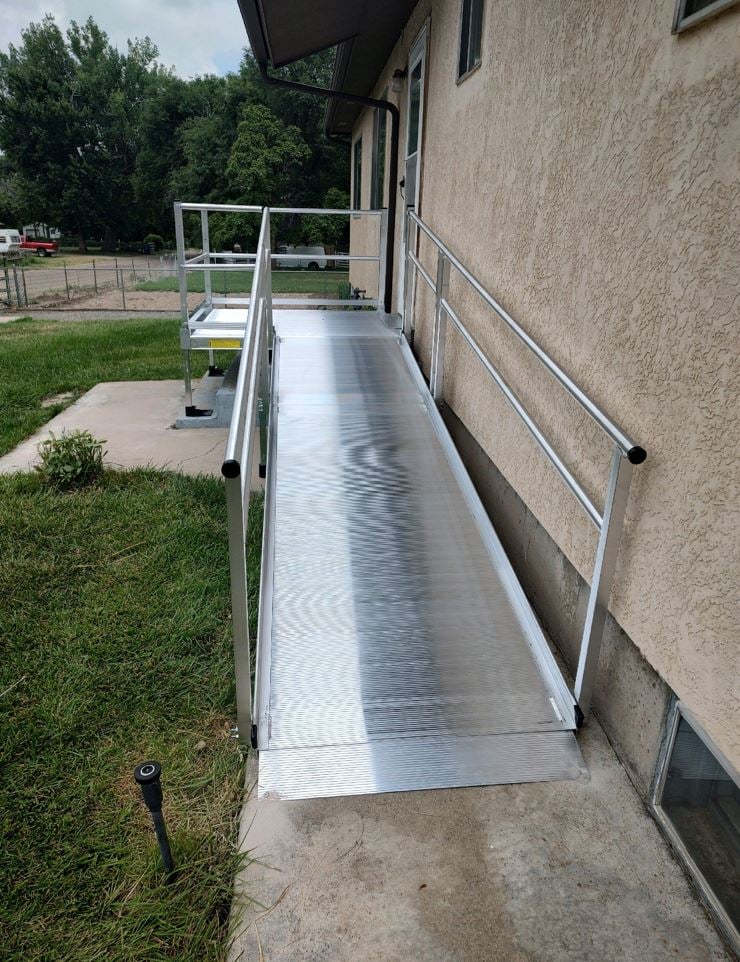 Depending on the individual’s needs, recommended modifications may include:
- Installing handrails on one or both sides of exterior stairs
- Improving outdoor lighting
- Adding non-slip surfaces
- Installing wheelchair ramps to eliminate step barriers
For many families, modular aluminum ramps are the most flexible accessibility solution. Proper ramp design is critical, so it’s important to work with an experienced home accessibility professional.
2. Navigating Throughout the Home
Inside the home, even small barriers can create major safety hazards. To improve your loved one’s mobility and orientation, consider these recommendations for dementia safety at home:
- Remove loose throw rugs and electrical cords
- Use threshold ramps between rooms with thresholds
- Add clear signs or picture labels to important rooms
- Improve hallway and stair lighting
- Block or supervise stair access when needed
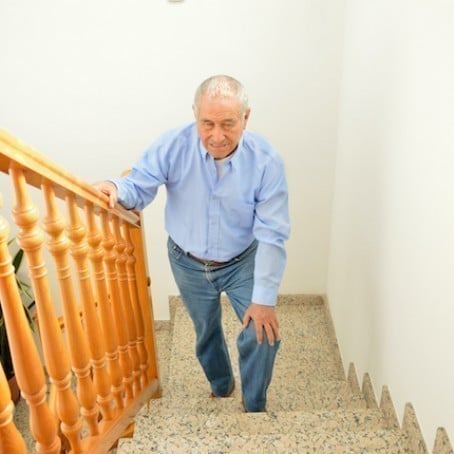
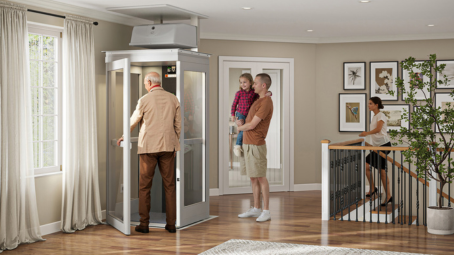
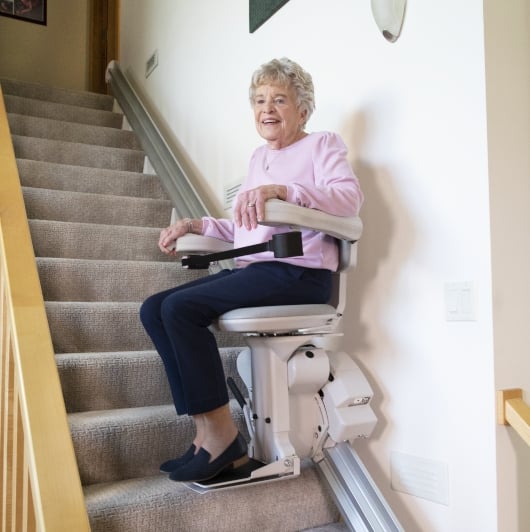
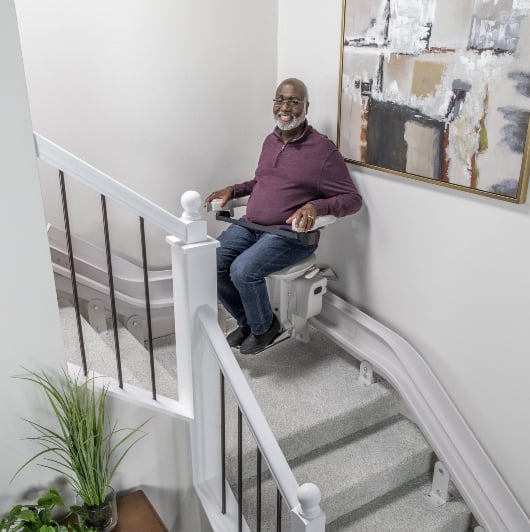
For some individuals, reducing or eliminating stair use entirely may be the safest option. In this case, a stair lift can help them travel between floors while reducing caregiver strain. However, caregivers should first carefully evaluate whether the individual is cognitively and physically able to operate a stair lift safely.

3. Bathroom Safety for Individuals with Dementia
 Bathrooms are among the highest-risk areas in the home because of slippery surfaces and frequent transfers. Some of the most effective dementia safety home tips for bathrooms include:
- Install grab bars or floor-to-ceiling safety poles for stability near toilets and showers
- Add raised toilet seats or colorful toilet risers for visibility
- Install anti-scald valves to regulate water temperature
- Add motion-sensor night lights
- Use non-slip mats and flooring
- Purchase a shower or tub transfer system to make the bathtub more accessible
- If remodeling the bathroom, consider a walk-in tub or barrier-free shower
These modifications can help reduce falls while making bathing and toileting easier for both the individual and caregiver.
Are Home Accessibility Solutions for Dementia Covered by Insurance?
Many families are surprised to learn that most home accessibility solutions are not typically covered by Medicare or standard health insurance plans. However, there may be alternative funding options available through:
- Long-term care insurance
- Veterans benefits programs
- Local Agencies on Aging
- State or municipal accessibility grants
- Nonprofit organizations
- Medicaid waivers
Working with a home accessibility provider can help families explore financing options and available resources.
Final Thoughts on Creating a Safer Home for Someone Living with Dementia
Home safety for people with dementia is an ongoing process that evolves as the disease progresses. The most effective dementia safety at home strategies focus on preventing falls and injuries, reducing confusion and anxiety, supporting independence, and maintaining comfort and dignity, while also improving caregiver support.
With thoughtful planning, gradual modifications, and the right support systems, families can create a safer and more supportive environment for loved ones living with Alzheimer’s disease or dementia.
If you have a patient or family member who needs a home accessibility assessment, contact Lifeway Mobility. Our team of experts can help you find the safety products that fit your needs, lifestyle, and budget.
Watch Our Complete Dementia Safety Webinar Now