Stair Lift vs. Home Elevator ROI
Posted on by Eric Rubel

When it comes to making your home safer and easier to navigate, two of the most common solutions are stair lifts and home elevators. Both improve accessibility and help people remain in the homes they love, but they come with very different experiences, costs, and long-term value.
So which option offers the better return on investment (ROI)?
The answer depends on your:
- Home
- Budget
- Mobility needs
- Long-term plans
For some homeowners, a stair lift provides a simple and cost-effective solution. For others, a home elevator may offer greater convenience and lasting value over time. Although ROI is not just financial, it also includes quality of life, safety, and convenience.
Below, we’ll compare stair lifts and home elevators in three key areas:
- Cost / Budget
- Space / Home Layout
- Long-Term Value / Future Goals
1. Cost & Budget
For most families, cost is one of the biggest deciding factors when comparing accessibility solutions.
Stair Lift Costs
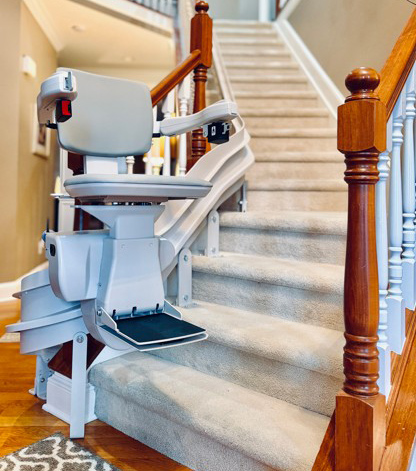
A stair lift is the more affordable option upfront than a home elevator. In most cases, a stair lift installation is relatively straightforward and can often be completed in a single day by our trained and certified technicians. Because stair lifts attach directly to the staircase rather than requiring major structural changes, labor and construction costs are usually minimal.
The total cost of a stair lift depends on several factors, most significantly on whether the staircase is straight or has turns, landings, or curves. The number of floors involved, indoor vs. outdoor installation, and optional customizations can also increase the price.
On average, stair lift costs range between $2,900–$25,000, making them a practical choice for homeowners looking for a lower-cost mobility solution.
Overall maintenance expenses for stair lifts are usually manageable compared to larger accessibility systems. Their long-term costs typically include:
- Periodic maintenance and inspections
- Battery replacement every few years
- Occasional repairs as components age
Home Elevator Costs
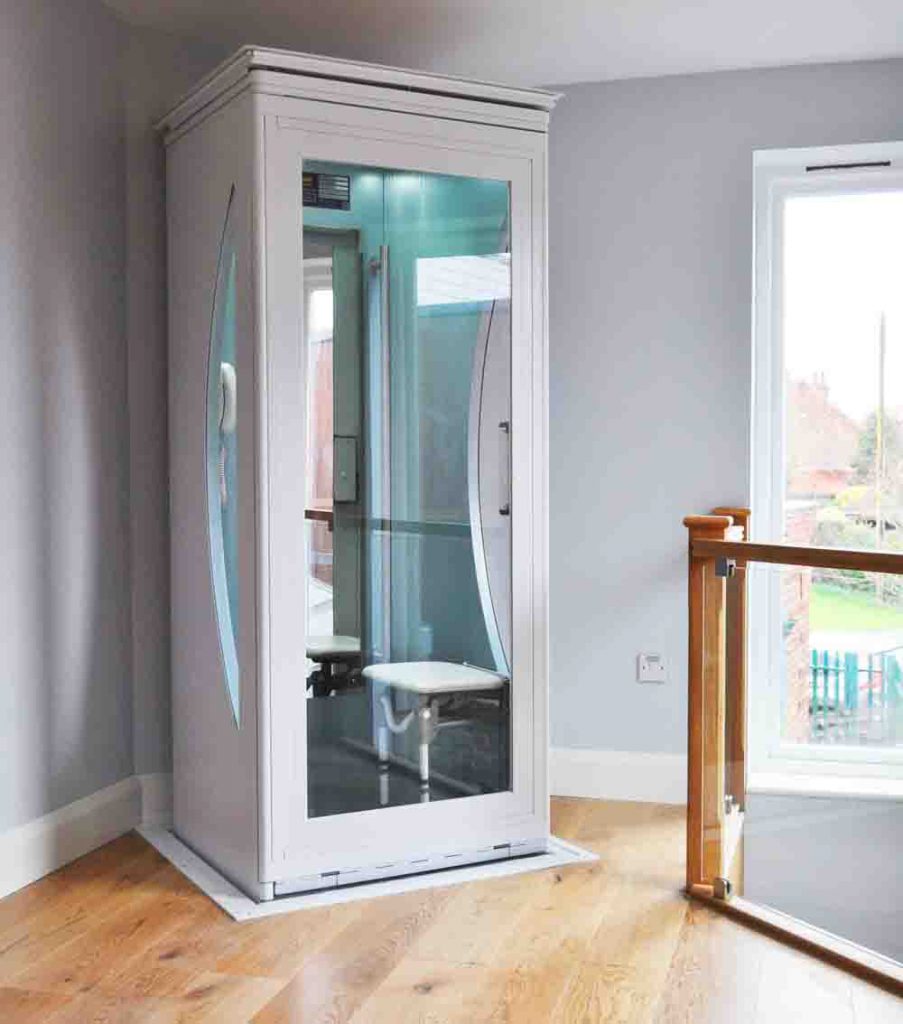
Home elevators require a much larger initial investment, with a longer installation timeline. Unlike stair lifts, elevators may involve structural modifications and electrical work, as well as additional permitting and inspection requirements.
Home elevator pricing varies dramatically depending on the type of elevator you select.
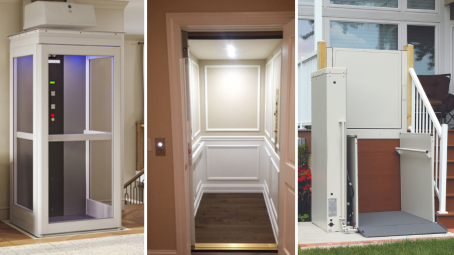
Because through-the-floor elevators are shaft-less, they require less construction and therefore are available at a lower price than traditional style home elevators, generally starting at around $35,000 (compared to $50,000+ for traditional home elevators, and $80,000+ for glass home elevators).
Elevators are more complex systems, so maintenance costs are generally higher than those of stair lifts. Long-term ownership expenses typically include:
- Annual maintenance service
- Mechanical inspections
- Potential repairs to motors, doors, or control systems
Which Offers Better ROI From a Cost Perspective?
If your goal is to solve a specific mobility issue with the lowest upfront investment, a stair lift often delivers the better short-term ROI.
However, if you’re planning to remain in your home for many years and want a broader accessibility solution that may support changing mobility needs over time, a home elevator may provide greater value despite the higher upfront cost.
Not sure which is better for your needs and will provide the best ROI for you and your family? Contact us to discuss with a Lifeway Mobility expert and schedule your free consultation.
2. Space
Another important consideration is the amount of space each option requires within the home.
Stair Lift Space Requirements
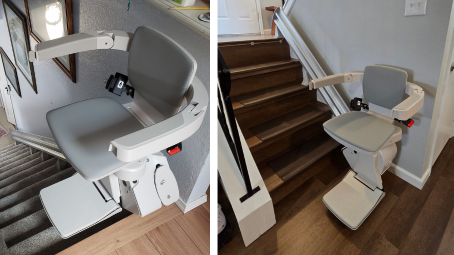
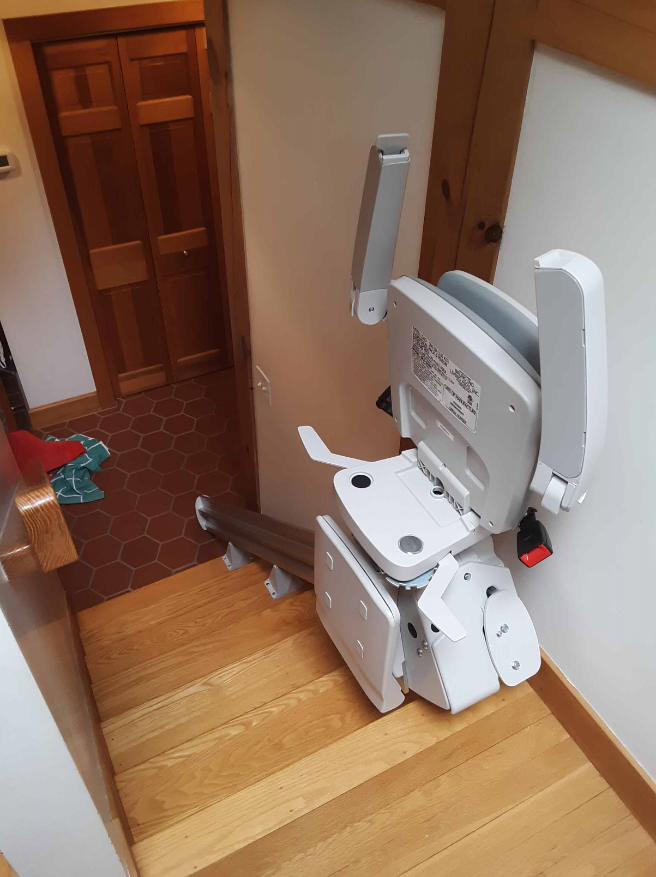
One advantage of stair lifts is that they work within your existing staircase. The rail is mounted directly to the stairs, and the chair folds when not in use to help preserve walking space. They can be installed without major renovations or layout changes.
That said, stair lifts do still occupy part of the staircase. Depending on the width of the stairs, other household members may notice reduced walking space. In narrower staircases, this can become more noticeable.
Learn about compact stair lifts for narrow staircases.
Home Elevator Space Requirements
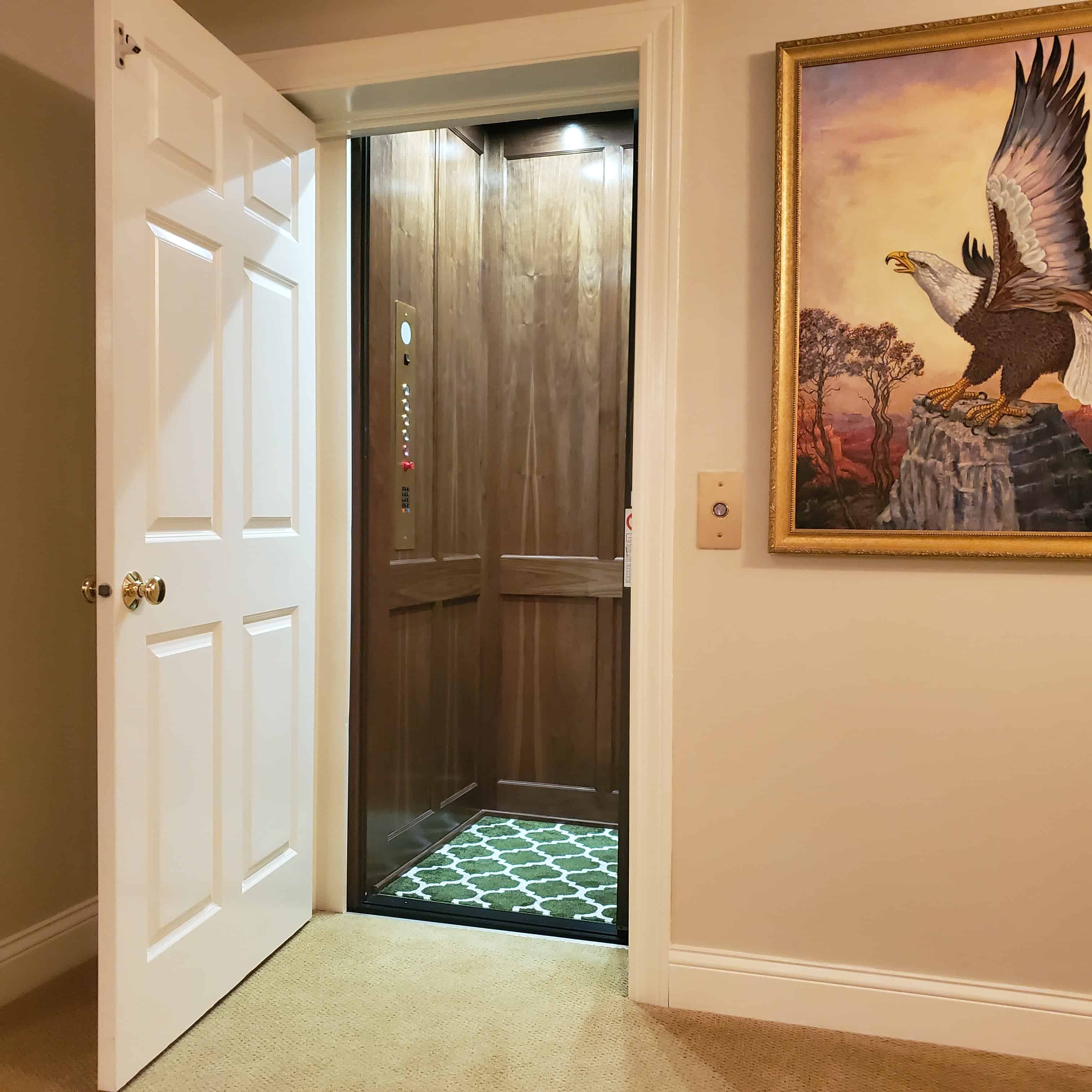
In general, home elevators require significantly more space than stair lifts, but the amount of space needed will depend on the type of elevator selected (through-floor vs. traditional elevator).
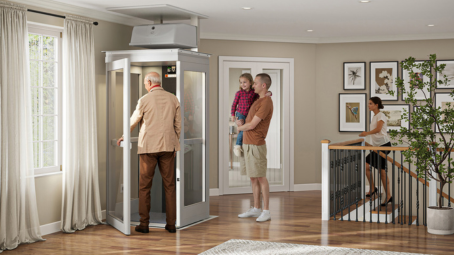
For through-floor elevators, a minimum of 14 sq ft is required for this type of elevator to fit into an existing room, traveling through a floor cut-out. These are easiest to retrofit into an existing home.
Traditional home elevators require a much larger footprint, including space for the shaft or hoistway, a room for mechanical or electrical equipment, and dedicated floor space on multiple levels. These types of elevators are easy to incorporate when building a new home, but in existing homes, adding an elevator may require sacrificing closet space or reconfiguring the layout.
However, elevators can sometimes integrate more naturally into the home’s design once installed. Unlike a stair lift, which remains visible along the staircase, an elevator can feel more like a built-in architectural feature.
Which Makes Better Use of Space?
For smaller homes and for homeowners who want minimal disruption, stair lifts usually have the advantage, as they use existing infrastructure and avoid major remodeling.
But for larger homes or long-term aging-in-place plans, home elevators are ultimately the cleaner, more versatile solution despite their larger footprint.
3. Long-Term Value & Goals
Finally, your return on investment is also about how each solution will affect your daily life, future flexibility, and even resale appeal.
Home Value & Buyer Appeal
In general, home elevators tend to contribute more positively to property value than stair lifts. Because elevators are often viewed as luxury or premium features, many buyers see them as desirable additions, especially in homes designed for aging in place.
A stair lift, on the other hand, is usually seen as a highly personal mobility device, and most buyers would expect it to be removed before purchasing the home. This doesn’t mean that stair lifts reduce your home value, but they typically don’t add the same level of broad market appeal as elevators.

Flexibility & Everyday Use
A home elevator can benefit everyone in the household, not just individuals with mobility limitations. For example, elevators can make it easier to carry heavy loads (like groceries, laundry, and luggage) between floors, reducing strain on knees and joints over time. This wider range of everyday uses can increase the perceived value of the investment.
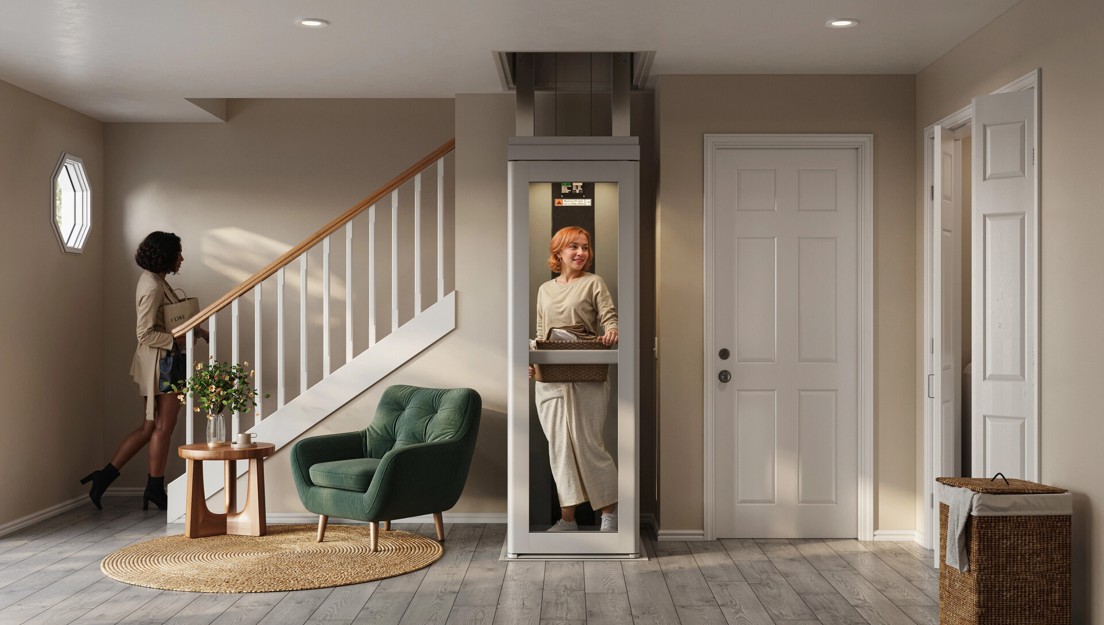
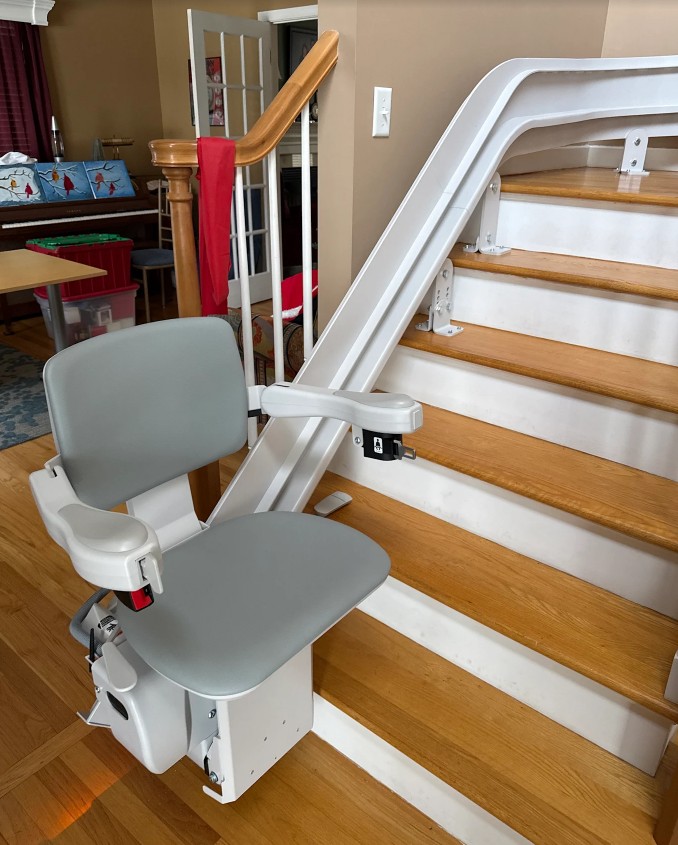
Stair lifts are more specialized. They are extremely effective for helping someone safely navigate stairs, but they primarily serve a single purpose.
Aging in Place & Accessibility Needs
Both solutions support aging in place & home accessibility, but they do so differently.
A stair lift is an excellent solution for someone who:
- Still walks independently & needs a simple solution to navigate the stairs
- Can safely transfer in and out of a chair
- Wants a lower-cost accessibility upgrade
- Has minimal space for adding an elevator to their home
A home elevator makes more sense for someone who:
- Has a multi-generational home or wants a luxurious addition
- Uses a wheelchair or walker
- Anticipates future mobility changes
- Wants accessibility for multiple household members
Final Thoughts
Both stair lifts and home elevators can improve your safety, accessibility, and independence at home. The solution that offers the better ROI depends on what matters most to you.
Choose a stair lift if affordability, fast installation, and minimal home modification are your priorities.
Choose a home elevator if you're thinking long-term and want a more versatile accessibility feature that may add broader appeal, convenience & resale value, and is worth the larger investment.
Stair Lift vs. Home Elevator - Side-by-Side Comparison
| Feature | Stair Lift | Home Elevator |
|---|---|---|
| Upfront Cost | $2,900-$25,00+ | $35,000-$100,000+ |
| Installation Time | 1 day | 1-2 weeks |
| Remodeling Required | No | Yes |
| Wheelchair Accessible | Typically No | Yes |
| Age-in-Place Potential | Yes | Yes |
| Adds Value to Home | No | Yes |
| Lifespan | 10 Years | 20-30 Years |
| Space Required | 24"+ wide staircase | Varies based on model |
The best way to compare your options is through a professional home accessibility consultation. By examining your home layout, understanding your mobility needs, and considering your future goals, a Lifeway Mobility accessibility expert can help you determine which solution delivers the greatest value for your lifestyle and budget.

Additional Stair Lift & Home Elevator Resources
FAQs
Does a stair lift or home elevator add more resale value to a home?
Stair lifts typically add no value to a home, while elevators can increase the resale value of multi-story homes by up to 10-20%.
How much does a stairlift cost compared to an elevator?
A stair lift is significantly less expensive than a home elevator, with prices ranging between $2,900-$25,500 compared to $35,000-$100,000+ for a home elevator.
Can wheelchair users utilize a stair lift?
While possible, stair lifts are typically not recommended for wheelchair users as they require someone to safely transfer onto and off of a chair. An elevator is a much better accessibility solution for wheelchair users.
What is the difference between a stair lift and a home elevator?
A stair lift helps an individual safely travel up/down a staircase, but requires a physical transfer on/off a chair that glides along a rail that gets directly mounted to the stair treads. Home elevators provide convenient floor-to-floor travel for 1 or multiple passengers through a floor cutout (through-floor elevators) or a hoistway (traditional elevators) without a transfer required, which makes it a more ideal solution for wheelchair users.
Are stair lifts covered by Medicare or Health Insurance?
Typically, stair lifts are not covered by Medicare or health insurance as they're not considered to be of medical necessity.
How long do stair lifts and home elevators last?
The lifespan of a stair lift is typically defined to be 10 years by most major manufacturers, with normal usage. Home elevators can last between 20 and 25 years with proper maintenance and usage.
Can stair lifts and home elevators be removed after being installed?
Yes, both stair lifts and elevators can be removed from a home after they're installed. However, it will be much easier/quicker for a stair lift to be removed as the removal of an elevator is a much more complex process that will required professional to reverse engineer the shaftway to reclaim the space if desired.