7 Home Elevator Alternatives
Posted on by Ben McCoy

At Lifeway Mobility, we pride ourselves on being a trusted leader in accessibility solutions by recognizing that every person's mobility journey is different. A home elevator can be a transformative option for individuals who struggle with stairs by offering a safe, convenient, and reliable way to move between floors. However, we understand that a home elevator isn't always the ideal solution for every individual or home.
For some, the structural requirements of a home elevator may not be compatible with their living space. For others, personal preferences, budget considerations, or the specific nature of their mobility challenges may lead them toward a different path. Whatever the reason, it's important to know that there are a variety of alternative accessibility solutions available that can account for different needs, spaces, and lifestyles.
At Lifeway Mobility, we are committed to helping you find the option that works best for you, ensuring greater independence, safety, and quality of life at home.
Home Elevator Alternatives
Use the links to jump to the home elevator alternative you're interested in, or simply scroll down to start reading the rest of the post.In this article, we will explore some common alternatives to home elevators to help you make an informed decision based on your specific situation.
Home Lifts
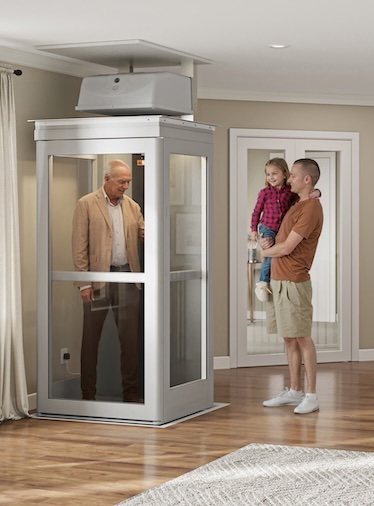
A home lift, also referred to as a “through-floor elevator or “shaftless elevator”, is becoming a popular alternative to a traditional home elevator. They are less costly than traditional home elevators, and also leave you with more usable space as there is no requirement for a machine room or hoistway. Depending on the size of the cab, home lifts can accommodate a wheelchair or more than one person at a time, making them an accessible solution option for wheelchair users.
Pros
- Quicker turnaround and installation time
- Cost-effective (minimal construction required)
- Allows for more usable space – no machine room needed
Cons
- Travel is limited to only two floor levels
- Limited custom options
- Requires an upgraded cabin size to fit a wheelchair user
Platform Lifts
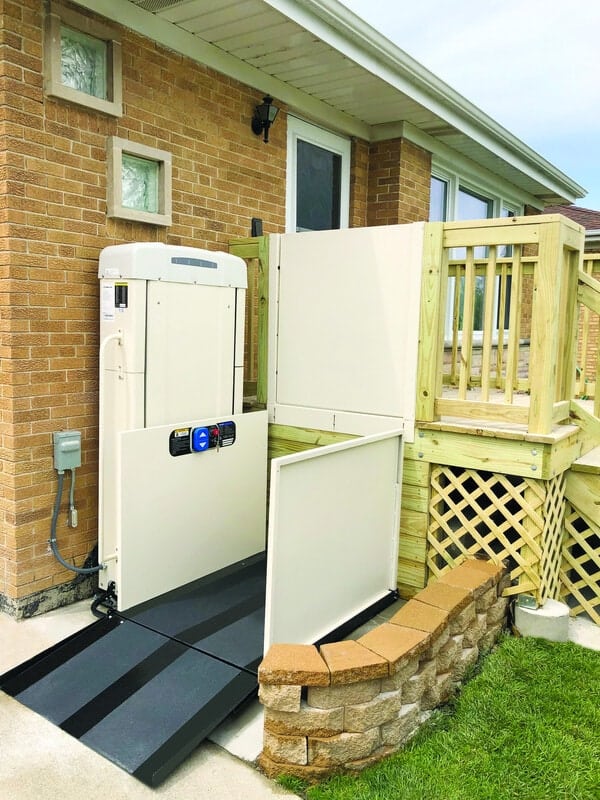
Platform lifts, also known as vertical platform lifts (VPLs), offer a great alternative solution for wheelchair and powerchair users seeking greater accessibility at home. While they are typically installed outdoors to make a home entryway or porch more accessible, platform lifts can also be installed indoors, allowing individuals to safely navigate between floor levels or travel up to 14 feet.
Like traditional elevators, platform lift installations may require the construction of a hoistway, which can add to both the cost and timeline of the project. That said, when compared to a full home elevator, platform lifts are generally more affordable and can be installed in less time, making them a practical middle-ground solution for many homeowners.
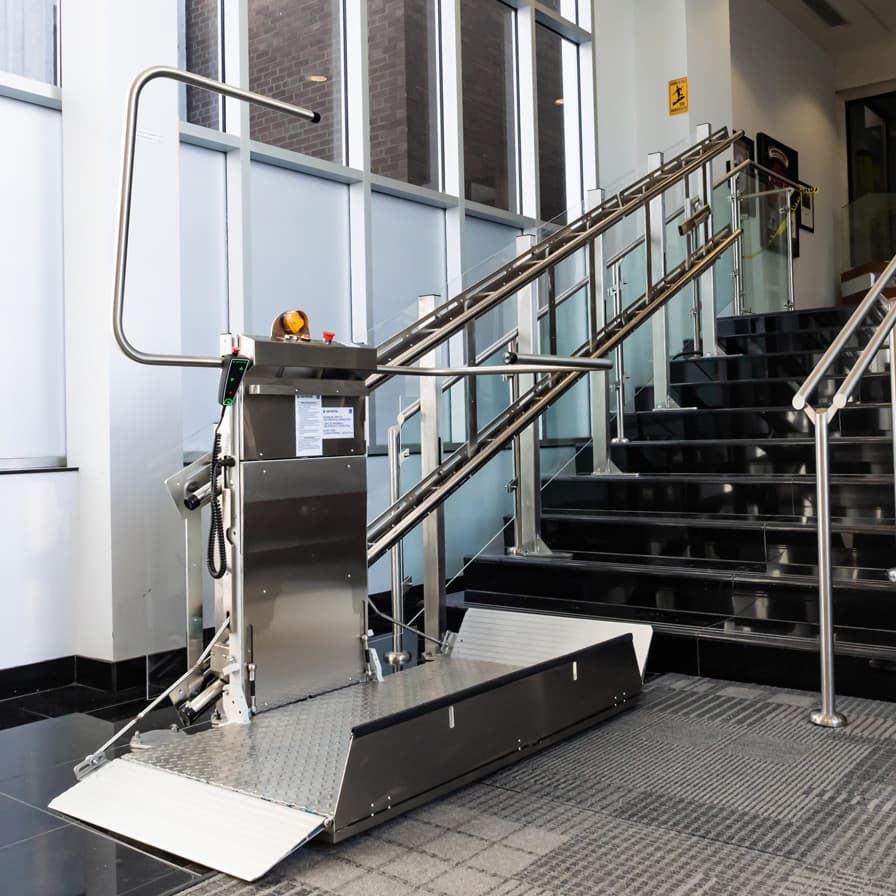
Inclined platform lifts (IPLs) are another type of platform lift that serves basically as a stair lift for wheelchairs and other mobility devices. Similar to a stair lift, inclined platform lifts are installed onto a stairway. A large flat platform folds down flat onto the landing, where a wheelchair user can roll onto it and be transported up and down the staircase. When not in use, the platform folds up toward the wall, allowing foot traffic to pass by on the stairs unimpeded.
Pros
- Wheelchair and powerchair friendly; no transfers required
- A more budget-conscious alternative to a traditional home elevator
- Compact design allows for installation in tighter spaces; IPLs are available for stairways
Cons
- Travel distance is limited compared to a traditional hoistway elevator
- Indoor installations typically require moderate construction
- Travel speeds are much slower than elevators
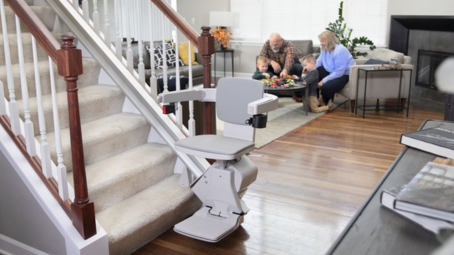
Stair Lifts
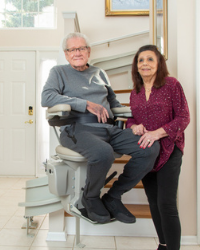
Another common alternative to purchasing a home elevator is having a stair lift professionally installed.
A straight stair lift ranges in price from $2,900 to $8,000, and a custom curved stair lift cost is typically between $12,000 and $25,000+, making it a much lower cost option than a traditional home elevator.
Mounted directly onto the stair treads, stair lifts require very little modification to your home and have a very small footprint overall.
While there are a variety of options to meet your specific needs, there aren’t nearly as many design upgrade options as there are for home elevators.
Pros
- Much lower cost option compared to a traditional home elevator
- Quicker turnaround/installation times (next day in some cases)
- Less intrusive; leaves home floorplan intact
Cons
- Limited to a single passenger
- Always in view on the stairway; limits staircase width
- Does not increase home value
Home Modifications
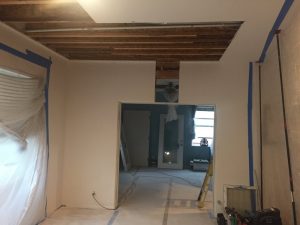
While different than adding a solution, another alternative worth noting is a home modification to improve access to certain areas of the home. Since the reason for a home elevator is to allow a person to gain easier and more convenient access to upper and/or lower levels of the home, then modifying the ground level of the home to accommodate those needs could be a viable option to installing a home elevator.
While some may choose to complete some home modification projects to improve access and quality of life at home, a complete structural renovation would likely be a higher-cost alternative than a home elevator.
Pros
- Eliminates reliance on the stairs for daily living
- Enables you to stay in your home
Cons
- Likely more expensive than a home elevator installation
- Requires structural alterations to the home
- Reduces usable space, limiting safe access to other floor levels of your home
- Much longer time for project completion
Stair Climbers
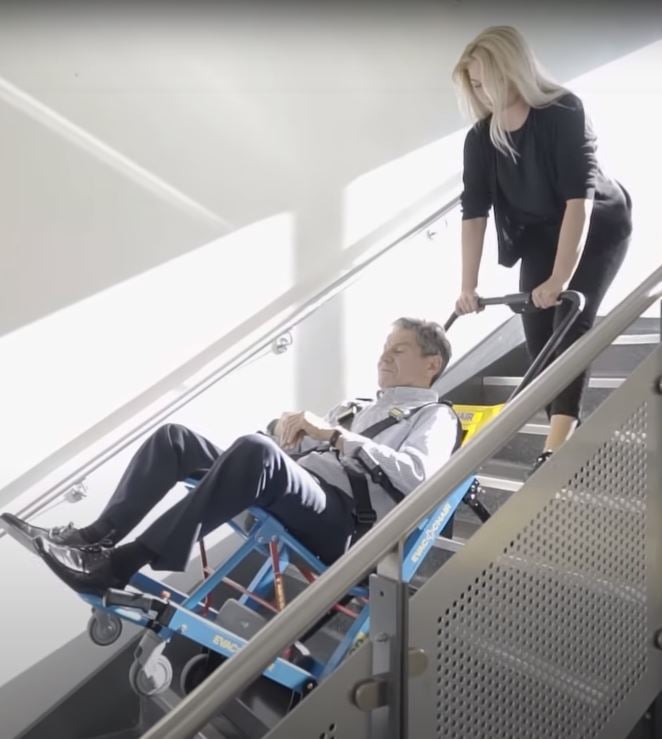
Attaching to most standard wheelchairs, stair climbers provide an easy way to move a person in a wheelchair up and down stairways with the touch of a button. While this requires assistance from an able-bodied person, it is ideal for short-term needs and offers another alternative solution to consider. Stair climbers can also be easily loaded into vehicles for use in other buildings or houses that have stairs.
Pros
- Does not require installation, or modification to your current home
- Portable and easy to store & transport for use on staircases at home & elsewhere
- Much more affordable than an elevator
Cons
- Requires assistance from an able-bodied person, which limits independence
- May not be safe to use on steep, narrow, or curved staircases
- Requires a lot more energy & time to navigate between floor levels
Downsizing into a Smaller Home
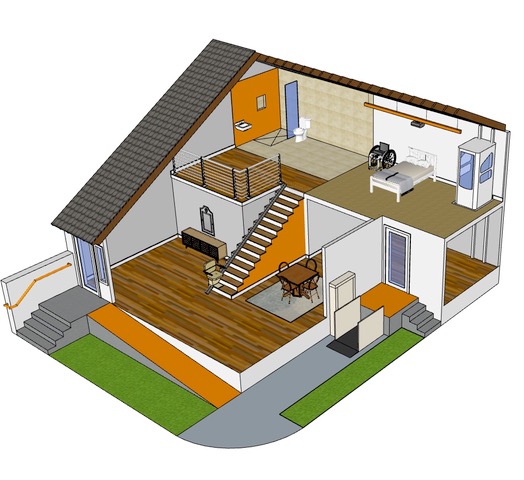
One serious consideration to explore is the possibility that it may be time to move. If none of the accessibility solutions above are the right fit for your home or mobility needs, or if you'd simply prefer not to modify your current space, relocating to a single-story ranch home is another option worth considering. For some individuals, when stairs become a significant barrier, moving to a home without them can be a practical long-term solution.
That said, moving is no small undertaking. Depending on your stage of life and how much you've accumulated over the years, the process can be physically and emotionally demanding. The financial impact will also vary as the cost of purchasing a new home versus installing an accessibility solution in your current one depends heavily on local housing market conditions, interest rates, and other factors. And perhaps most importantly, leaving a home you've lived in for many years means leaving behind the familiarity, neighborhood, comfort, and memories that make a house feel like home.
Pros
- Eliminates the challenge of navigating stairs entirely
- May lower overall living and home maintenance costs
- Potentially less upkeep compared to a larger, multi-story home
Cons
- The emotional weight of leaving a longtime home and adjusting to a new environment
- Loss of connection to familiar neighbors and community
- The physical demands and logistical hassle of the moving process itself
Moving into a Senior or Assisted Living Facility

For those who find downsizing impractical or unappealing, moving into a senior living or assisted living facility is another alternative to consider. However, like any major life transition, this option comes with its own emotional challenges. Leaving a familiar home environment and adjusting to a new setting is rarely easy, regardless of the quality of the facility and care provided.
From a financial standpoint, this is by far the costliest option covered in this article. Monthly fees for senior and assisted living facilities typically range from $1,500 to $10,000 per month, or $18,000 to $120,000 annually. To put that in perspective, the cost of having a mobility solution professionally installed in your current home could pay itself in as little as one to ten months when compared to the ongoing expense of senior or assisted living.
Pros
- Facilities are designed to be fully accessible and safe to navigate
- Access to full-time support and professional care (if mobility needs & condition require this)
- Greater opportunities for socialization and community engagement
Cons
- By far the most expensive option, with high ongoing monthly costs
- Loss of the independence and privacy that comes with living in your own home
- Leaving behind familiar surroundings, neighbors, and community connections
Home Elevator Alternative Comparison
| Accessibility Solution | Best For | Wheelchair Accessible | Space Required | Travel Distance | Install Time | Typical Cost Range | Indoor/ Outdoor |
|---|---|---|---|---|---|---|---|
| Home Lifts | Two-floor access, usable space | Yes (larger cab option) | Moderate | 2 floors | 1-2 weeks | $$$$ | Indoor |
| Platform Lifts | Porch or garage access | Yes | Small-Moderate | 14 ft. max | 4-8 hours | $$$ | Indoor & Outdoor |
| Stair Lifts | Variety of staircases designs, quick need | No (transfer required) | Staircases 26" or wider | Entire staircase | 2-5 hours | $$ | Indoor & Outdoor |
| Stair Climbers | Straight staircase access, with assistance | Yes | Straight Staircase | Entire staircase | N/A | $-$$ | Indoor & Outdoor |
| Home Elevators (for baseline comparison) | Multi-floor homes, long-term investment & value | Yes | Moderate-Large | 2-4 floors | 1-4 weeks | $$$$$ | Indoor |
Best Home Elevator Alternatives for:
- Wheelchair Users: Platform Lifts & Home Lifts
- Multilevel Access: Stair Lifts (will require more than 1 lift typically)
- Preserving Usable Space: Home Lifts
- Long-Term Investment: Home Lifts
- Low Budget Option: Stair Lifts or Stair Climbers
Lifeway Mobility Can Help You Choose the Right Mobility Solution for Your Home!
Regardless of which option is the best fit for your home and mobility needs, you have already taken the first and most important step, which is to recognize the need and to begin the research process. And no matter which direction you decide to move toward, our local home accessibility experts are ready to help you during this transition process.
When you’re ready, give us a call (513) 214-2315 or contact us to schedule a free in-home consultation, and we will help you make the right decision for you and your home.
Frequently Asked Questions
What’s the most common home elevator alternative?
The most common home elevator alternative is typically a home lift, aka a through-floor elevator. This solution provides similar benefits to a traditional home elevator at a fraction of the cost and requires less space.
What’s the average cost of a home elevator?
On average, the price of a home elevator ranges between $35,000 and $80,000+. The final cost is dependent upon floors served, the configuration of the elevator cab, design options, and other considerations.
What are alternatives to a home elevator?
Home lifts, stair lifts, and platform lifts are some of the most common cost-effective alternative solutions to traditional home elevators. The best alternative will depend on the mobility needs of the user, space available, budget, and home layout.
What are the most wheelchair-friendly alternatives to stair lifts?
Platform lifts, and home lifts are excellent wheelchair accessible home elevator alternatives. While more costly, a home modification is another alternative to consider, although it may be more costly.
Will insurance pay for wheelchair ramps, platform lifts, and elevators?
Private health insurance and Medicare typically do not cover most home accessibility solutions as they do not consider them to be “of medical necessity”. However, funding may be available through Medicaid waivers, VA grants, and other local or national funding sources.
Additional Resources
- Up and Down the Stairs Solutions
- Choosing a Home Elevator – Through Floor vs. Hoistway
- Compare Best Home Elevators
- Stair Lifts vs. Home Elevators
- How Much Does a Platform Lift Cost?