
How to Choose the Best Ceiling Patient Lift for Your Home - What to Consider
Posted on by Ben McCoy
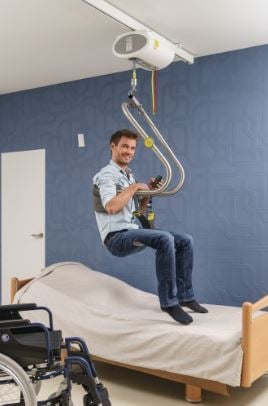
When a loved one has difficulty transferring safely from a bed to a wheelchair, to the bathroom, or between rooms, everyday routines can quickly become stressful not only for the patient, but for caregivers and other family members as well.
Having a ceiling lift professionally installed can make those transfers safer, easier, and more comfortable while reducing the physical strain on caregivers. For many families, it is one of the most effective ways to support long-term care at home.
But How Do You Know Which Ceiling Lift is Right for Your Situation?
Choosing which overhead or patient ceiling lift, fixed or portable, that is best for your home depends on the following factors:
- User’s mobility needs
- Layout of the home
- Permanent or temporary solution
- Comfort & support
- Caregiver experience
- Professional installation & service
Some people need a ceiling lift system for daily, long-term use, while others are looking for a shorter-term or more flexible option. Understanding the differences can help you choose a solution that improves safety, comfort, and peace of mind, and this blog post will help you get started.
Understand the Difference Between Fixed and Portable Ceiling Lifts
Before reviewing some of the most important considerations in choosing the best ceiling lift for your home, it’s important to understand what the difference is between a fixed and portable ceiling lift system.
Fixed Ceiling Lifts
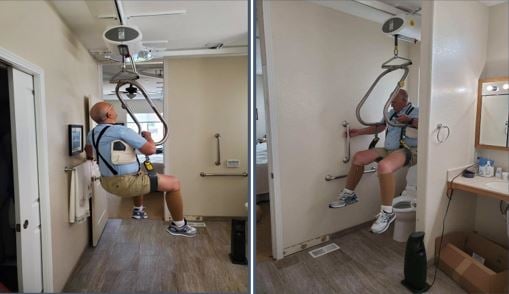
A fixed ceiling lift is mounted permanently on an overhead track system and is often the best choice for long-term use. These systems are ideal for households where transfers happen frequently and where a dependable, everyday solution is needed. Because the motor remains on the track, a fixed lift offers the convenience of being permanently installed to access the spaces where support is needed most.
Portable Ceiling Lifts
A portable ceiling lift offers more flexibility. Instead of staying on one track system, the motor can be moved between compatible track locations or used with a gantry system. This can be a smart solution for short-term needs, changing care situations, or homes where a permanent installation may not be the best option.
In general, families who are planning long-term accessibility often prefer the simplicity and convenience of a fixed lift, while portable systems are attractive when flexibility is a top priority.
Start With the User’s Daily & Mobility Needs
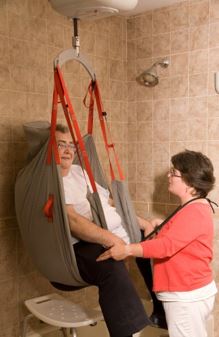
The first factor to consider in choosing the right overhead lift is taking the time to think through the user’s daily routine, and which transfers are required to best serve their needs. Is the goal of helping someone:
- Get from the bed to a wheelchair?
- From a wheelchair to the toilet or shower?
- Between multiple rooms?
Perhaps some combination of some or all of these is required. Determining these issues will identify what type of lift is needed for the patient.
Since the needs of a loved one or patient are unique, having a full understanding of their daily routine; as well as the specific features of your home, will serve in determining the specific attributes of the ceiling lift itself.
Some people need support for only one transfer in one room; while others need a more comprehensive solution that allows movement from bedroom to the bathroom and possibly even into other rooms in the house. The more clearly these needs are defined, the easier it becomes to identify the right type of overhead lift that would best serve your needs.
Another important consideration is the user’s strength, balance, and level of support needed during transfers. Some individuals may do well with a more specialized body support system, while others may need a traditional sling with full body or head support.
Setting up a free consultation with a local Lifeway Mobility ceiling lift expert can help you understand and select the appropriate transfer support system that will best serve the user’s needs.
Consider the Layout of the Home
The layout of the home plays a major role in determining the best overhead patient lift system.
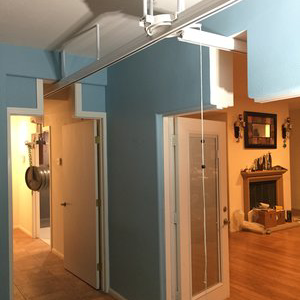
Some users may only require a straight track in a bedroom to transfer from one fixed location to another, such as from the bed to a wheelchair. Others may need a more customized setup that allows movement around corners, through doorways, or from one room to another. If the goal is to support multiple transfers throughout the home, the track design becomes just as important as the lift itself.
This is where customization matters. In some situations, a ceiling lift can be designed to travel from room to room, helping create a smoother daily routine and reducing the need for repeated repositioning. If your home has unique structural features or the lift needs to serve multiple areas, a more tailored track system may be the best option.
When evaluating the best fit, it helps to think not only about where the lift will start, but also where it needs to go and how that movement will fit into everyday life.
Permanent or Temporary Solution?
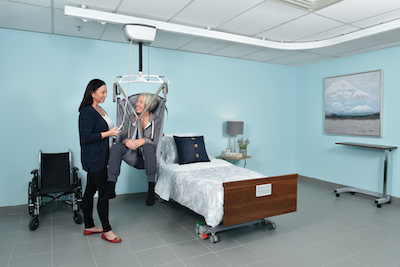
Another important question is how long the lift will be utilized for safe access.
If the overhead lift is part of a home care plan or long-term aging-in-place, a permanent ceiling lift system is often the best investment. A fixed lift can provide a reliable solution for daily routines and may offer the most convenience over the years.
If the need is temporary, however, a portable ceiling lift or freestanding lift may be a better choice. For example, if someone is recovering from surgery, living in a rental home, or in a care situation that may change sometime soon, the flexibility of an impermanent lift may be more valuable than a fixed ceiling lift system.
Portable ceiling lifts can often be paired with gantry systems, giving families a practical alternative when ceiling-mounted tracks are not feasible. Freestanding lift systems can also work well in situations where structural changes are not possible or desired.
Think About Comfort and Support
Not all overhead and ceiling lift systems support the body in the same way, and comfort matters more than many people realize.
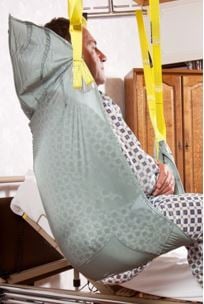
Some systems use traditional slings in a variety of styles, including options for toileting, bathing, full-body support, and specialized medical needs. Others offer more unique support systems that may feel more natural for certain users. The right choice depends on the individual’s mobility level and how much support they need during the transfer process.
Don’t Overlook the Caregiver Experience
The best ceiling lift system should be a comfortable fit not only for the person being transferred, but also for the caregiver using it. Transfers are often repeated multiple times per day, so ease of operation matters. A well-designed system can help reduce physical strain, improve safety, and create a smoother routine for family caregivers and professionals alike. This is one of the biggest benefits of a ceiling lift: it helps take the stress and uncertainty out of a task that can otherwise be physically demanding.
When comparing options, it is helpful to think about how the system will function in real life:
- Will it be easy to access?
- Simple to charge?
- Comfortable & safe to use each day?
A lift that is simple to operate and feels smooth and predictable can make a big difference over time. Since these systems are often used daily, families should look for a solution that feels manageable, dependable, and comfortable for everyone involved.
Professional Installation and Ongoing Service
Choosing the right ceiling lift system is only part of the equation. Professional installation and long-term support are highly recommended and just as important to ensure safe use and peace of mind for the user, and caregiver.
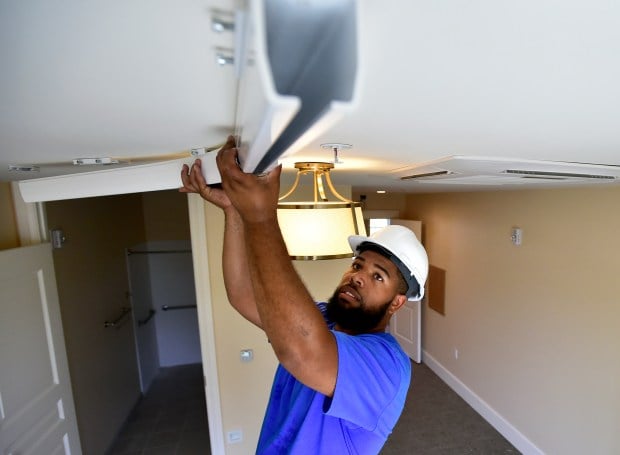
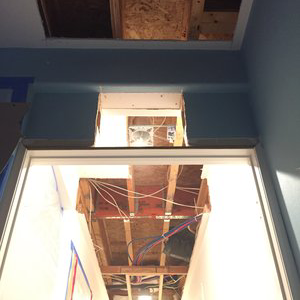
A properly installed and inspected lift system should be customized to the home, the user’s needs, and the intended transfer path. Working with a certified and authorized provider such as Lifeway Mobility, will ensure the system is installed safely and functions as intended from day one.
It is also important to ask about service, maintenance, and warranty coverage. Since a ceiling lift often becomes an essential part of daily life, families should feel confident that help is available if service is ever needed.
When a Freestanding Lift May Be the Better Option
Although many families begin by looking at ceiling lifts, a freestanding lift system can sometimes be the better overall fit.
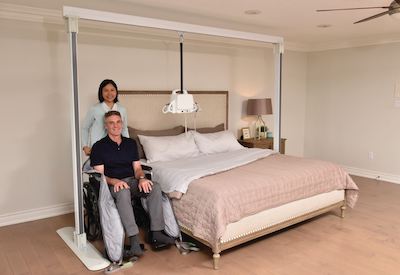
Freestanding lifts are especially useful in homes where ceiling track installation is not possible due to structural limitations, ceiling design, or rental restrictions. They can also be a great option for temporary needs or for families who want a flexible solution that can be assembled and adjusted more easily.
For some households, a freestanding lift provides the accessibility support they need without the commitment of a permanent ceiling-mounted track. While it may not be the right answer for every home, it is an option well worth considering during the decision-making process.
Choosing the Best Patient Lift for Your Home
The best patient ceiling lift system for your home is the one that fits your needs today while also supporting safety and independence in the future.
For some families, that will be a fixed ceiling lift designed for long-term daily use. For others, a portable ceiling lift or freestanding system may offer the flexibility they need. The right choice depends on the user’s mobility, the type of transfer required, the structure of the home, and whether the need is temporary or ongoing.
At Lifeway Mobility, we help families evaluate these factors and find the solution that works best for their home and lifestyle. With the right patient ceiling lift system in place, transfers can become safer, more comfortable, and less stressful, helping both users and caregivers feel more confident every day.

Frequently Asked Questions
Are ceiling lifts covered by Medicare?
Ceiling lifts, in certain situations, can be partially or fully covered by Medicare. There are a range of mitigating circumstances that determine the question of reimbursement by Medicare.
In order to gain an understanding of Medicare coverage for your circumstances, it is advisable to discuss your specific situation with your doctor and Medicare professional.
How much does a ceiling lift cost?
The cost of a ceiling lift ranges between $10,000 and $25,000+, depending on a variety of factors, such as the type & layout of the lift system, home modifications needed, and any special requirements.
How do ceiling lifts work?
A ceiling lift works via a motorized power lift unit that travels along a fixed track mounted to the ceiling. Other types of overhead lifts operate in a similar fashion but utilize different methods of patient transfer.
How long does it take for a ceiling lift to be installed?
The time it takes to install a ceiling lift depends on the complexity of the system and the amount of home modifications needed. Typically, a ceiling lift can be professionally installed in 1-3 days.
Can one person use a ceiling lift independently?
A caregiver is usually required in order to safely affix the patient sling or patient support system and to help transfer the patient.